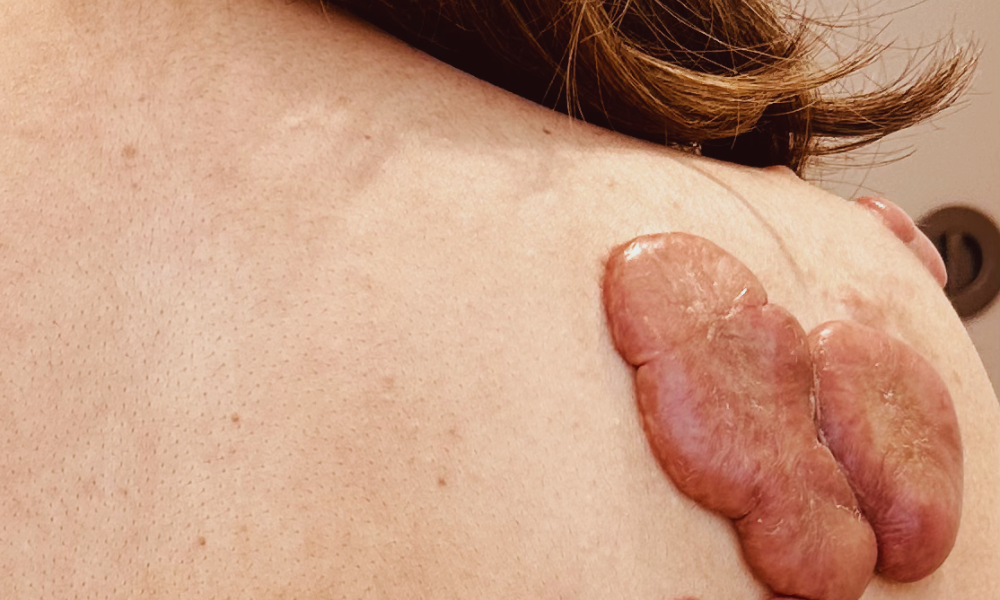
Keloids can be one of the most challenging forms of pathological scarring because treatment is addressing both the visible scar and the underlying tendency for abnormal healing.
Unlike regular scars, keloids grow beyond the boundaries of the original wound. They reflect an overactive healing response in which collagen production, inflammation, and scar activity continue for longer than they should. Even after treatment, that biological tendency may persist — which is why keloid recurrence remains a recognised challenge.
For those who have already undergone treatment more than once, a recurrence can be particularly difficult to navigate. Understanding why keloid regrowth after removal happens — and how recurrence risk may be reduced — helps support more realistic long-term planning.
Unlike regular scars, keloids grow beyond the boundaries of the original wound. They reflect an overactive healing response in which collagen production, inflammation, and scar activity continue for longer than they should. Even after treatment, that biological tendency may persist — which is why keloid recurrence remains a recognised challenge.
For those who have already undergone treatment more than once, a recurrence can be particularly difficult to navigate. Understanding why keloid regrowth after removal happens — and how recurrence risk may be reduced — helps support more realistic long-term planning.
Why do keloids recur?
Normal scars typically move through predictable phases of healing: inflammation settles, collagen production slows, and the scar gradually remodels.
Keloids behave differently.
In keloid-prone individuals, healing signals may remain active for longer than expected. Fibroblasts can continue producing excess collagen, inflammatory pathways may remain heightened, and the scar may continue expanding beyond the original injury.
This helps explain why removing the visible scar does not always eliminate the underlying tendency for recurrence.
Keloids can develop after a range of triggers — surgical wounds, burns, acne, piercings, vaccinations, viral skin conditions such as chickenpox, and even minor trauma like insect bites or scratches.
For those with a predisposition, the threshold can be surprisingly low. An injury that heals without issue in one person may trigger a keloid in another.
Keloids behave differently.
In keloid-prone individuals, healing signals may remain active for longer than expected. Fibroblasts can continue producing excess collagen, inflammatory pathways may remain heightened, and the scar may continue expanding beyond the original injury.
This helps explain why removing the visible scar does not always eliminate the underlying tendency for recurrence.
Keloids can develop after a range of triggers — surgical wounds, burns, acne, piercings, vaccinations, viral skin conditions such as chickenpox, and even minor trauma like insect bites or scratches.
For those with a predisposition, the threshold can be surprisingly low. An injury that heals without issue in one person may trigger a keloid in another.
Why can keloids return after surgery?
If you've had a keloid removed and watched it grow back, sometimes larger than before, you're not alone.
Surgical removal can be appropriate in selected patients — particularly when a keloid is large, symptomatic, recurrently inflamed, or causing functional problems. However, surgery creates a new wound. In someone predisposed to keloid formation, that new wound may trigger the same abnormal healing response again.
This is why keloid recurrence after surgery can be high when excision is performed in isolation.
Published studies have reported recurrence rates after excision alone ranging from approximately 45% to more than 90%, depending on scar location, treatment history, and patient-specific factors.
This does not mean surgery should be avoided. It means surgery often works best when considered as part of a broader scar management strategy and requires regular and long term follow up.
Surgical removal can be appropriate in selected patients — particularly when a keloid is large, symptomatic, recurrently inflamed, or causing functional problems. However, surgery creates a new wound. In someone predisposed to keloid formation, that new wound may trigger the same abnormal healing response again.
This is why keloid recurrence after surgery can be high when excision is performed in isolation.
Published studies have reported recurrence rates after excision alone ranging from approximately 45% to more than 90%, depending on scar location, treatment history, and patient-specific factors.
This does not mean surgery should be avoided. It means surgery often works best when considered as part of a broader scar management strategy and requires regular and long term follow up.
What increases the risk of recurrence?
There is no universal keloid recurrence rate, as recurrence risk varies significantly between patients.
Factors that may increase recurrence risk include:
Factors that may increase recurrence risk include:
Scar location
Certain anatomical locations appear more prone to keloid recurrence than others. The chest, shoulders, upper back, jawline, and earlobes are among the areas most commonly associated with regrowth, likely due to higher mechanical tension across the skin or repeated localised irritation.
Ongoing inflammation
Ongoing inflammation is another indicator of recurrence risk. Keloids that remain red, itchy, painful, or firm — or that continue to grow — may represent more biologically active scars. This kind of persistent activity suggests the underlying healing response has not settled, which can make long-term stability harder to achieve.
Previous recurrence
Patients who have undergone multiple previous procedures may have more complex scar behaviour.
Genetics, systemic factors, and skin type
Some individuals appear to have a stronger inherited predisposition toward keloid formation. Certain systemic factors may also influence scar behaviour and recurrence risk, including but not limited to:
• Hormonal influences
• Chronic stress
• Metabolic or inflammatory co-morbidities
• Delayed wound healing states
Skin type and individual inflammatory responses can also contribute to how aggressively a scar behaves.
Mechanical tension
Tension across healing wounds remains an important but often under-recognised contributor to scar recurrence.
Certain anatomical locations appear more prone to keloid recurrence than others. The chest, shoulders, upper back, jawline, and earlobes are among the areas most commonly associated with regrowth, likely due to higher mechanical tension across the skin or repeated localised irritation.
Ongoing inflammation
Ongoing inflammation is another indicator of recurrence risk. Keloids that remain red, itchy, painful, or firm — or that continue to grow — may represent more biologically active scars. This kind of persistent activity suggests the underlying healing response has not settled, which can make long-term stability harder to achieve.
Previous recurrence
Patients who have undergone multiple previous procedures may have more complex scar behaviour.
Genetics, systemic factors, and skin type
Some individuals appear to have a stronger inherited predisposition toward keloid formation. Certain systemic factors may also influence scar behaviour and recurrence risk, including but not limited to:
• Hormonal influences
• Chronic stress
• Metabolic or inflammatory co-morbidities
• Delayed wound healing states
Skin type and individual inflammatory responses can also contribute to how aggressively a scar behaves.
Mechanical tension
Tension across healing wounds remains an important but often under-recognised contributor to scar recurrence.
What helps reduce keloid recurrence?
There is rarely a single treatment that prevents recurrence in every patient.
Management often involves combining therapies based on individual risk factors, scar behaviour, location, symptoms, and prior treatment history.
Depending on the scar, treatment may include:
Topical and intralesional therapies
A range of intralesional and anti-inflammatory therapies may be used to help reduce inflammation, regulate collagen production, and support scar stabilisation. These treatments are often incorporated into a broader multimodal management plan and may be considered at various stages — during active scar progression, before or after surgery, or at the first signs of recurrence. Treatment selection varies between patients and is guided by scar behaviour, symptoms, anatomical location, and previous treatment response.
Silicone therapy
Silicone gels or sheets may help support scar maturation after wound healing.
Compression therapy
Pressure-based treatments may be particularly useful for certain locations such as earlobe keloids.
Laser and energy-based treatments
Laser treatment may be used in selected patients to help manage scar thickness, redness, symptoms, and surface irregularity as part of a broader treatment plan.
However, as keloids are highly inflammation-driven scars, energy-based treatments must be selected and timed carefully. In some cases, excessive heat or overly aggressive treatment may aggravate inflammation and potentially contribute to further scar activation. Treatment approach, device selection, and settings therefore require careful individualisation.
Surgical revision
For larger or more complex keloids, surgery may still play an important role — but usually alongside strategies aimed at reducing recurrence risk.
Radiotherapy
Post-operative radiotherapy may be considered in selected cases.
This requires careful discussion with treating specialists, particularly in younger patients and in anatomically sensitive areas.
Management often involves combining therapies based on individual risk factors, scar behaviour, location, symptoms, and prior treatment history.
Depending on the scar, treatment may include:
Topical and intralesional therapies
A range of intralesional and anti-inflammatory therapies may be used to help reduce inflammation, regulate collagen production, and support scar stabilisation. These treatments are often incorporated into a broader multimodal management plan and may be considered at various stages — during active scar progression, before or after surgery, or at the first signs of recurrence. Treatment selection varies between patients and is guided by scar behaviour, symptoms, anatomical location, and previous treatment response.
Silicone therapy
Silicone gels or sheets may help support scar maturation after wound healing.
Compression therapy
Pressure-based treatments may be particularly useful for certain locations such as earlobe keloids.
Laser and energy-based treatments
Laser treatment may be used in selected patients to help manage scar thickness, redness, symptoms, and surface irregularity as part of a broader treatment plan.
However, as keloids are highly inflammation-driven scars, energy-based treatments must be selected and timed carefully. In some cases, excessive heat or overly aggressive treatment may aggravate inflammation and potentially contribute to further scar activation. Treatment approach, device selection, and settings therefore require careful individualisation.
Surgical revision
For larger or more complex keloids, surgery may still play an important role — but usually alongside strategies aimed at reducing recurrence risk.
Radiotherapy
Post-operative radiotherapy may be considered in selected cases.
This requires careful discussion with treating specialists, particularly in younger patients and in anatomically sensitive areas.
How to prevent keloid recurrence
Early intervention can be important.
If a scar becomes progressively raised, itchy, painful, or continues expanding beyond the original wound, early assessment may allow treatment before the scar becomes more established.
Patients with a known history of keloids should discuss this with their treating doctor before undergoing elective surgery, piercings, tattoos, or cosmetic procedures involving skin injury. In individuals at higher risk, non-essential skin trauma should be carefully considered, with a clear discussion of potential benefits, risks, and preventative strategies before proceeding.
If a scar becomes progressively raised, itchy, painful, or continues expanding beyond the original wound, early assessment may allow treatment before the scar becomes more established.
Patients with a known history of keloids should discuss this with their treating doctor before undergoing elective surgery, piercings, tattoos, or cosmetic procedures involving skin injury. In individuals at higher risk, non-essential skin trauma should be carefully considered, with a clear discussion of potential benefits, risks, and preventative strategies before proceeding.
What happens if a keloid comes back?
Recurrence does not necessarily mean treatment has failed.
In some cases, recurrent scars return smaller, flatter, or less symptomatic than the original lesion. Others may require ongoing or staged management over time.
Further treatment depends on the scar’s behaviour, symptoms, anatomical location, and previous treatment history. Management may involve a combination of non surgical and procedural approaches tailored to the individual scar.
Keloid management requires long-term follow-up rather than a single intervention, particularly in patients with biologically active or recurrent disease.
In some cases, recurrent scars return smaller, flatter, or less symptomatic than the original lesion. Others may require ongoing or staged management over time.
Further treatment depends on the scar’s behaviour, symptoms, anatomical location, and previous treatment history. Management may involve a combination of non surgical and procedural approaches tailored to the individual scar.
Keloid management requires long-term follow-up rather than a single intervention, particularly in patients with biologically active or recurrent disease.
Do keloids always come back after treatment?
No, keloids do not always come back after treatment.
Some patients achieve long-term scar stability. Others may experience recurrence despite appropriate treatment.
Keloids are highly variable, which is why treatment planning should be individualised.
Some patients achieve long-term scar stability. Others may experience recurrence despite appropriate treatment.
Keloids are highly variable, which is why treatment planning should be individualised.
When should you seek specialist review?
Specialist review may be appropriate if a scar continues growing beyond the original injury, if symptoms such as pain or itch persist or worsen, if previous treatments have not achieved adequate improvement, or if the scar is affecting function or you are considering surgical removal.
Not all raised scars are keloids. Hypertrophic scars and other forms of pathological scarring may require different treatment approaches, making accurate diagnosis important.
Not all raised scars are keloids. Hypertrophic scars and other forms of pathological scarring may require different treatment approaches, making accurate diagnosis important.
Final thoughts
Dealing with a keloid that keeps coming back is genuinely difficult — and it is important to understand that recurrence is not a sign of failure, either on your part or your treating clinician's.
Keloids recur because the underlying healing response can remain active long after the original injury has healed. While this makes management more complex, recurrence risk can often be reduced through careful diagnosis, multimodal treatment planning, and long-term follow-up.
The goal is not simply scar removal, it is achieving a more stable, less symptomatic scar, and a clearer path forward.
All procedures carry risks. Individual outcomes vary.
Keloids recur because the underlying healing response can remain active long after the original injury has healed. While this makes management more complex, recurrence risk can often be reduced through careful diagnosis, multimodal treatment planning, and long-term follow-up.
The goal is not simply scar removal, it is achieving a more stable, less symptomatic scar, and a clearer path forward.
All procedures carry risks. Individual outcomes vary.