Why Burn Scars Are Different — And Why Recovery Takes Longer
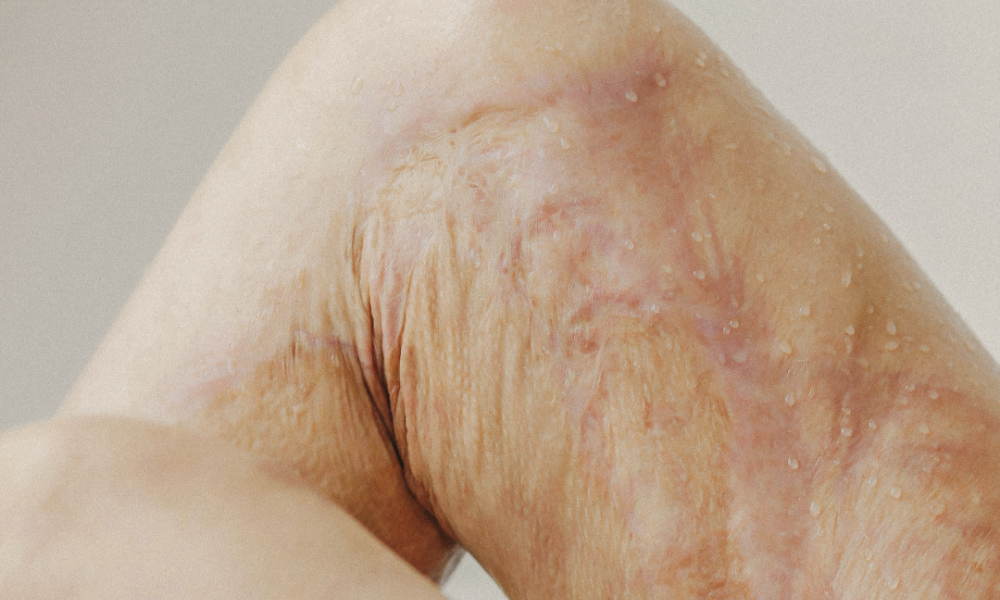
If you are living with a burn scar, you may have noticed that it behaves differently from other types of scars. Understanding why burn scars are different can help explain why symptoms such as itch, pain, tightness, redness, and sensitivity may persist long after the wound has healed.
Unlike surgical or traumatic scars, burns often cause less predictable injury extending beyond the skin surface to affect fat, fascia, muscle, nerves, blood vessels, and lymphatics — while triggering a prolonged inflammatory and hypermetabolic response that drives excess collagen production and elevated stress hormones for months to years.
This helps explain why burn scar treatment is often complex, staged, and multidisciplinary.
Unlike surgical or traumatic scars, burns often cause less predictable injury extending beyond the skin surface to affect fat, fascia, muscle, nerves, blood vessels, and lymphatics — while triggering a prolonged inflammatory and hypermetabolic response that drives excess collagen production and elevated stress hormones for months to years.
This helps explain why burn scar treatment is often complex, staged, and multidisciplinary.
Why Are Burn Scars Different From Surgical or Traumatic scars?
The skin heals differently depending on how the injury occurs.
In planned surgery, wounds are created under controlled conditions with minimal tissue trauma and precise closure techniques designed to reduce tension and optimise healing.
Burn injuries are different. They often involve irregular tissue damage, prolonged inflammation, delayed wound healing, skin grafting, larger surface areas, injury across joints or mobile areas, and loss of normal skin structures — including hair follicles, sweat glands, and components of the dermal scaffold — all of which alter how the skin repairs itself.
The longer a burn wound takes to heal, the greater the risk of abnormal scar formation. As a result, burn scars are more likely to become thickened, raised, tight, contracted, painful, itchy, and temperature-sensitive. In some patients, this results in hypertrophic burn scars, where excessive, biologically active scar tissue continues to remodel over time.
Burn scars may also behave differently across different parts of the same injury — some areas remaining flat and soft, while others become highly active and symptomatic.
In planned surgery, wounds are created under controlled conditions with minimal tissue trauma and precise closure techniques designed to reduce tension and optimise healing.
Burn injuries are different. They often involve irregular tissue damage, prolonged inflammation, delayed wound healing, skin grafting, larger surface areas, injury across joints or mobile areas, and loss of normal skin structures — including hair follicles, sweat glands, and components of the dermal scaffold — all of which alter how the skin repairs itself.
The longer a burn wound takes to heal, the greater the risk of abnormal scar formation. As a result, burn scars are more likely to become thickened, raised, tight, contracted, painful, itchy, and temperature-sensitive. In some patients, this results in hypertrophic burn scars, where excessive, biologically active scar tissue continues to remodel over time.
Burn scars may also behave differently across different parts of the same injury — some areas remaining flat and soft, while others become highly active and symptomatic.
Why do burn scars take so long to heal?
Burn scar healing extends well beyond wound closure.
Even after the skin surface has healed, mature burn scars may remain biologically active. Ongoing inflammation, collagen remodelling, vascular changes, and mechanical forces continue to influence the scar — a period known as scar maturation, which commonly spans 12–18 months, though some scars remain active longer.
Several factors influence this timeline: burn depth, time to wound healing, the need for skin grafting, anatomical location, age, skin type, and mechanical tension across joints and mobile areas.
Importantly, "healed" does not mean "fully recovered." Many burn survivors continue to experience evolving symptoms long after wound closure.
Even after the skin surface has healed, mature burn scars may remain biologically active. Ongoing inflammation, collagen remodelling, vascular changes, and mechanical forces continue to influence the scar — a period known as scar maturation, which commonly spans 12–18 months, though some scars remain active longer.
Several factors influence this timeline: burn depth, time to wound healing, the need for skin grafting, anatomical location, age, skin type, and mechanical tension across joints and mobile areas.
Importantly, "healed" does not mean "fully recovered." Many burn survivors continue to experience evolving symptoms long after wound closure.
What Is a Burn Scar Contracture and Why Does It Matter?
A burn scar contracture occurs when scar tissue tightens and shortens over time, restricting normal movement.
Contractures commonly develop across areas of repeated motion — including the neck, shoulders, elbows, hands, chest, knees, and ankles. As collagen fibres progressively contract during scar maturation, surrounding tissues can be pulled into abnormal positions, reducing range of motion.
Patients may experience tightness, pain with movement, difficulty with daily tasks such as dressing or washing, impaired hand function, postural changes, and skin breakdown over areas of tension. Neuropathic pain is also common in burn-affected areas due to nerve damage and abnormal nerve regeneration. In children, contractures may interfere with normal growth and development.
If untreated, severe contractures can become increasingly difficult to correct over time.
Contractures commonly develop across areas of repeated motion — including the neck, shoulders, elbows, hands, chest, knees, and ankles. As collagen fibres progressively contract during scar maturation, surrounding tissues can be pulled into abnormal positions, reducing range of motion.
Patients may experience tightness, pain with movement, difficulty with daily tasks such as dressing or washing, impaired hand function, postural changes, and skin breakdown over areas of tension. Neuropathic pain is also common in burn-affected areas due to nerve damage and abnormal nerve regeneration. In children, contractures may interfere with normal growth and development.
If untreated, severe contractures can become increasingly difficult to correct over time.
Why Are Burn Scars Often More Severe Than Other Scars?
Burns frequently affect larger surface areas and regions exposed to significant mechanical stress. Burn scars — including skin graft scars and donor sites — may involve chronic inflammation, altered pigmentation, neuropathic symptoms, reduced sweating, and heat intolerance. Scars crossing joints or mobile regions may progressively tighten, contributing to functional restriction over time.
The psychological impact of burn scarring can also be substantial and varies considerably between individuals.
The psychological impact of burn scarring can also be substantial and varies considerably between individuals.
What Treatments Are Used in Burn Scar Management?
Burn scar treatment is multimodal — multiple approaches are combined depending on scar behaviour, location, symptoms, and stage of healing, and management frequently evolves over time.
Silicone therapy supports scar maturation and reduces trans-epidermal water loss. Compression therapy via pressure garments may help reduce scar thickness and promote remodelling in selected patients. Physiotherapy and occupational therapy are central to burn rehabilitation, helping maintain range of motion, reduce stiffness, and minimise contracture development. Scar massage and desensitisation may assist with tissue mobility, hypersensitivity, and scar pliability. Laser scar treatment and laser scar revision may address redness, vascularity, scar thickness, texture, tightness, and symptoms such as itch — with timing and modality depending on wound healing and scar behaviour. Surgical reconstruction may be required when contractures or significant functional limitations develop.
Silicone therapy supports scar maturation and reduces trans-epidermal water loss. Compression therapy via pressure garments may help reduce scar thickness and promote remodelling in selected patients. Physiotherapy and occupational therapy are central to burn rehabilitation, helping maintain range of motion, reduce stiffness, and minimise contracture development. Scar massage and desensitisation may assist with tissue mobility, hypersensitivity, and scar pliability. Laser scar treatment and laser scar revision may address redness, vascularity, scar thickness, texture, tightness, and symptoms such as itch — with timing and modality depending on wound healing and scar behaviour. Surgical reconstruction may be required when contractures or significant functional limitations develop.
When is burn scar reconstruction needed?
Not all burn scars require surgery. Surgical intervention may be considered for significant contracture, functional impairment, progressive restriction of movement, recurrent wound breakdown, failure of conservative management, or major contour abnormalities.
Burn scar reconstruction may involve contracture release, skin grafting, local or regional flaps, tissue rearrangement, or staged reconstruction — and is frequently
combined with postoperative rehabilitation, splinting, compression, and laser treatment.
Burn scar reconstruction may involve contracture release, skin grafting, local or regional flaps, tissue rearrangement, or staged reconstruction — and is frequently
combined with postoperative rehabilitation, splinting, compression, and laser treatment.
Who should manage burn scars long-term?
Burn scar management often requires collaboration between burn surgeons, plastic and reconstructive surgeons, physiotherapists, occupational therapists, scar specialists, rehabilitation teams, psychologists, and pain specialists.
Management is not solely focused on appearance. Functional outcomes, symptom control, psychological wellbeing, and quality of life are often equally important goals. Long-term follow-up helps identify evolving issues such as contractures, active hypertrophic scarring, or functional decline.
Management is not solely focused on appearance. Functional outcomes, symptom control, psychological wellbeing, and quality of life are often equally important goals. Long-term follow-up helps identify evolving issues such as contractures, active hypertrophic scarring, or functional decline.
Do burn scars go away?
Burn scars generally improve over time, but many do not disappear completely. Some scars soften, flatten, become more pliable and become less symptomatic as they mature. Others remain permanently visible or continue to cause symptoms such as itch, tightness, altered sensation, or reduced mobility.
Long-term outcomes depend on burn depth, healing time, anatomical location, skin type, grafting, and individual scar biology.
The goal of burn scar treatment is often not complete scar removal, but rather optimisation of function, comfort, mobility, scar quality, symptom control, and overall daily function.
Long-term outcomes depend on burn depth, healing time, anatomical location, skin type, grafting, and individual scar biology.
The goal of burn scar treatment is often not complete scar removal, but rather optimisation of function, comfort, mobility, scar quality, symptom control, and overall daily function.
What should burn survivors expect realistically?
Burn scar recovery is often gradual and non-linear. Scars may continue changing over time, and treatment frequently occurs in stages rather than through a single intervention.
Some patients require only conservative scar care, while others undergo prolonged rehabilitation, laser scar treatments, or reconstructive procedures over many years.
Realistic expectations are important. Although burn scars generally cannot be removed completely, many patients experience meaningful improvements in itch, pain, tightness, sensitivity, and restricted movement through carefully individualised burn scar management.
At Scarless – The Clinic in Sydney, burn scar management focuses on understanding how a burn scar is affecting both the tissue and the person, recognising that long-term outcomes involve more than appearance alone.
All procedures carry risks. Suitability for treatment requires individual clinical assessment. Individual outcomes vary.
Some patients require only conservative scar care, while others undergo prolonged rehabilitation, laser scar treatments, or reconstructive procedures over many years.
Realistic expectations are important. Although burn scars generally cannot be removed completely, many patients experience meaningful improvements in itch, pain, tightness, sensitivity, and restricted movement through carefully individualised burn scar management.
At Scarless – The Clinic in Sydney, burn scar management focuses on understanding how a burn scar is affecting both the tissue and the person, recognising that long-term outcomes involve more than appearance alone.
All procedures carry risks. Suitability for treatment requires individual clinical assessment. Individual outcomes vary.